
Precision Machining
Precision Machining Background Information
Machining is a manufacturing process where a desired shape or part is created using the controlled removal of material, most often metal, from a larger piece of raw material by cutting. Machining is a form of subtractive manufacturing, which utilizes machine tools, in contrast to additive manufacturing (e.g. 3D printing), which uses controlled addition of material.
Machining is a major process of the manufacture of many metal products, but it can also be used on other materials such as wood, plastic, ceramic, and composites. A person who specializes in machining is called a machinist. As a commercial venture, machining is generally performed in a machine shop, which consists of one or more workrooms containing primary machine tools. Although a machine shop can be a standalone operation, many businesses maintain internal machine shops or tool rooms that support their specialized needs. Much modern-day machining uses computer numerical control (CNC), in which computers control the movement and operation of mills, lathes, and other cutting machines.
Precision Machining Manufacturing Process Step Explanation


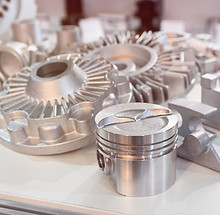


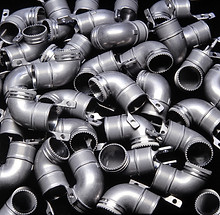


1. Jig Fixture Development
The first step involves designing and building a metal jig-fixture, gauges or required tool from steel or super alloy. This jig-fixture is playing major role in machining process to control the dimensional tolerance stability & accuracy level as per the requirement where the exact location can be place coordinate to coordinate without any error.
2. Raw Material
If the parts will be made from the direct metal as-raw material like round bar, flat bar, hex bar, pipe, sheet or plate then it will be procure from the market as per component engineering specification requirement based with proper mill source and at the time of inward it will be checked in laboratory which must be as per requirement.
3. Bar Cutting
Raw material billet or bar will be cut as per the calculation based on the part geometry & dimension where proper chopping process is required to match exact near & net shape of the expected component as per print where it will cut in proper length calculation with based fundamentals
4. Heat Treatment
The purpose of heat treatment is to change a mechanical property or combination of mechanical properties so that the metal will be more useful, serviceable, and safe for a definite purpose. By heat treating, a metal can be made harder, stronger, and more resistant to impact, heat treatment can also make a metal softer and more ductile.
5. CNC
In machining, numerical control, also called computer numerical control (CNC), is the automated control of tools by means of a computer. It is used to operate tools such as drills, lathes, mills, grinders, and routers. CNC transforms a piece of material into a specified shape by following coded programmed instructions and without a manual operator directly controlling the machining operation
6. VMC
Milling is the process of machining using rotary cutters to remove material by advancing a cutter into a workpiece. This may be done by varying directions on one or several axes, cutter head speed, and pressure. Milling covers a wide variety of different operations and machines, on scales from small individual parts to large, heavy-duty gang milling operations. It is one of the most commonly used processes for machining custom parts to precise tolerances.
7. Drilling
Drilling is a cutting process where a drill bit is spun to cut a hole of circular cross-section in solid materials. The drill bit is usually a rotary cutting tool, often multi-point. The bit is pressed against the work-piece and rotated at rates from hundreds to thousands of revolutions per minute. This forces the cutting edge against the work-piece, cutting off chips (swarf) from the hole as it is drilled.
8. Deburring
A burr is a raised edge or small piece of material that remains attached to a workpiece after a modification process. It is usually an unwanted piece of material and is removed with a deburring tool in a process called deburring. Burrs are most commonly created by machining operations, such as grinding, drilling, milling, engraving or turning. It may be present in the form of a fine wire on the edge of a freshly sharpened tool or as a raised portion of a surface; this type of burr is commonly formed when a hammer strikes a surface. Deburring accounts for a significant portion of manufacturing costs.
9. Threading & Gauging
Threading operation performed with the print requirement on component engineering specification where for mass production point of view gauging system can be useful for checking 100% production parts where fitment, function or assembly point of view any issue can be avoided.
10. Finishing
Parts will be done with super finishing process where some multi-type metal, glass and ceramic media will be used for the process to make a superior level surface finish or surface treatment as per process demand or customer specific requirement point of view.
11. Laser Marking
Normally for part details or brand name or logo highlight point of view the process called laser marking can be done in smooth machined surface, In many cases it can be used for identification or treatability point of view.
12. Shipment
Parts will be done with standard or customised packaging system to make a shipment on desired location by customer, From the beginning level incoterms has been already set for the goods despatch and clearance of the shipment with particular system & process.
Precision Machining Advantages
-
Repeatability
-
Reliability
-
Good part soundness
-
High productivity
-
Tight dimensional control
-
Superior surface finish
-
Excellent aesthetic look
Precision Machining Disadvantages
-
Requires highly skilled manpower
-
Expensive tooling investment
-
Limited design flexibility
-
Generate waste material